Embracing New Ideas and Avoiding Repetition
Dear reader, I think it’s important for me to manage your expectations. Let’s get ourselves on the same page right from the start.
You see, some novels are like big productions, with teams of people working behind the scenes to create the final product. I hate that I just wrote a product and not a book. Yes, it is something that is produced and then sold, which does make it, in fact, a product. But that is not how I grew up with books.
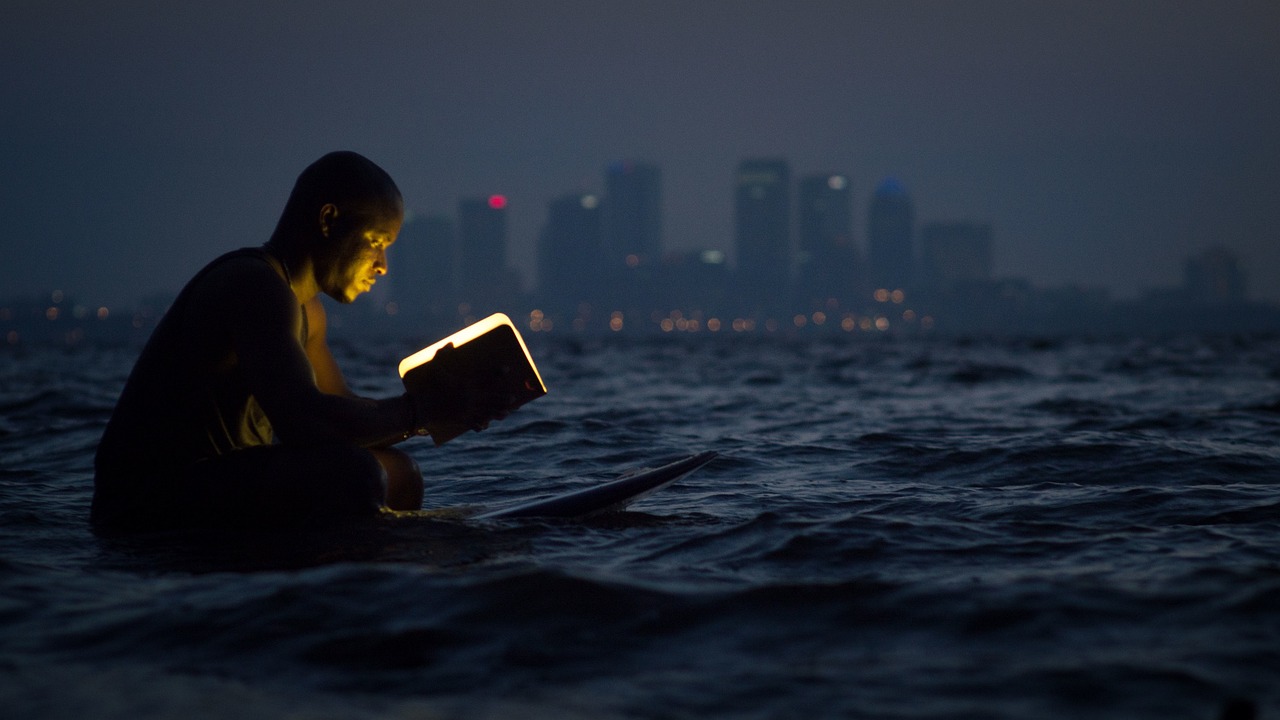
I grew up with books that mostly lived in a library. We had only a minimal number of novels at home, and I read them early or was not interested at all. So, if I wanted to read a book, I got one from the library. And those weren’t products; they were magic doorways into special worlds.
These teams sometimes include professionals who bring their expertise in language, design, and other intricate details. Other times, they consist of friends or acquaintances who chip in because they like the author and have some time to spare.
Where do these people come from? I myself rarely have time to do all the things I want to do for myself, neglect the things that I really should or must do, and have no spare time to do anything for free for anybody else.
I also cannot imagine myself asking others to do such for me. Okay, I can imagine it, but it is not with excitement but with a kind of persistent and transcendental horror that deals with crossing social boundaries and invading spaces.
So, yes, there are often large teams behind books, and those teams can help catch all the little errors that might otherwise slip through. Typos on the first page, characters changing hair color mid-book—these are the kinds of things that a team might catch. I solve the hair color problem by rarely mentioning it and by not using chapters at all. Typos, spelling, and grammar mistakes? Well, I keep making those.
Now, here’s where I stand: if I do work with a team, it’s a very small one—mostly just me. Yeah, I’m kind of a loner, especially with creative tasks. If I can’t do it by myself, it mostly just won’t get done. Sometimes because I think I can still do a better job if I do it myself, and sometimes because of those horror visions I have about the interaction itself. I can’t imagine anyone else taking my needs seriously enough to do hours of work for free.
Sure, there’s the idea of exchanging tasks: I read your stuff and find your typos, and you read my stuff and find mine.
What if your book sucks and I don’t like it? That is going to end up being a very awkward interaction, and I don’t want to have that, not even just in my imagination.
My wife helps with this, though; she’s better at getting people on board, which is why I sometimes have a small team. She also helps catch things like incorrect tenses or double ‘he’s. Still, I’ve come to accept that when I release a book, it might have some mistakes. Some will be genuine errors, while others will be intentional quirks that someone somewhere will think are mistakes.
This lack of external input can go both ways. On the one hand, it means my stories might be more unique and personal because they haven’t been polished by committee. But if you’re looking for a perfectly polished story, this might not be a good thing. I could spend ten years polishing a story, or I could not. Mostly, I won’t.
From a certain point of view, this might be a bad thing. It can make my books less marketable because there’s no one to point out the bits that might turn readers off or the elements that need to be there for a book to fit neatly into a genre. This lack of conformity might mean my books don’t meet certain reader expectations. A lot of people care about meeting those expectations, but not me.
My approach also means that my books are less likely to be consistent from one to the next. I write a specific kind of fiction, but even within that, I like to explore different sub-genres and tropes. I don’t enjoy repeating myself. What motivates me is the thrill of new experiences and ideas, and that’s what I aim for in my stories. A wild imagination leads to different kinds of stories, which might make them harder to categorize.
Now, it’s entirely possible that I might write something that’s completely unoriginal. There’s so much out there that’s already been done, and without a team to check, I might unknowingly tread familiar ground. But even with an army of readers, no one can know everything that’s been done before. I can always give it my own spin, and that’s different enough for me.
So, why should you read my books? Because they’re different from what everyone else is writing. Hell, I want you to read my books because I wrote something different from what I wrote before.
Consistency is overrated. I get that when you want a coffee or a heart transplant, you want a consistent level of quality, but when you’re reading a book about imaginary people doing imaginary things in imaginary worlds, then those imaginary people can be inconsistent bastards.
That said, there’s value in shocking literary moments, fresh approaches, and brave plot twists. Comfort reads have their place, but they don’t push boundaries the way something new and different can. A series of books, on the other hand, requires consistency in style, presentation, plot, and character. You don’t want to read about a detective solving gruesome murders in one book and then find him on a spiritual pilgrimage in the next. Although, that’s exactly the kind of thing I might write.
I’m not talking about trilogies or big stories broken into multiple books because of length. I’m talking about the kind of serial writing where the same characters deal with similar plots and problems in each book.
You don’t really want to read a book about a thirty-something police detective solving gruesome murders in one book, and in the next book you find that your detective had a nervous breakdown, and you are now reading a book about his spiritual pilgrimage through Tibet. Though that is exactly something I might write.
Not that I haven’t read series like that. I have, and I get why they’re appealing. In an ever-changing world, it is nice sometimes to fall back into familiarity and find comfort in the things you can depend on. I get that too. That’s when I reread a book I’ve read before. Or rewatch a movie or a series.
But with me, I would rather you depend on the fact that from one book to the next, I am going to give you something different. Even if I write a book set in the same fictional world, it will be a different kind of book.
I won’t be able to write a series of books with the same basic plot and the same basic characters just wearing different colored socks and then only changing scarlet to plum and rope to pipe. You won’t get that kind of consistency from me.
I do, however, dream of writing that ultimate mega-big story that spans multiple volumes because it is just so dense and rich with so many stories to tell. But that is also daunting, and I know I can at least finish one moderate-sized novel.
My books come from the weird and vast imaginary world that I live in most of the time. I have a unique mix of interests, occupations, and obsessions. A few stories repeat themselves, though you might notice recurring themes and images. After all, I can only draw from my own life and experiences, with my unique mix of interests and obsessions. For instance, I often write about events during torrential rainstorms, for reasons I can’t fully explain.
I’ll continue to write modest novels in a broad speculative genre to explore those. Some books will succeed with a broader appeal, and some will only be for a very limited number of readers.
In conclusion, why would you then read any of my books?
- For stories unbound by convention, where imagination takes the lead.
- To experience something different with every turn of the page.
- Because polished perfection isn’t as compelling as raw creativity.
- If you’re seeking an escape from formulaic storytelling.
- For the quirks, the imperfections, and the unexpected twists.
- Because each book is a fresh exploration, not a rehash.
- If you value authenticity over assembly-line fiction.
- For the joy of discovering unique worlds crafted from an individual vision.
- Because sometimes, a wild journey is better than a predictable destination.
The Seventh Kill
A modest fantasy thriller that starts on a clear autumn day and then the weather changes to heavy rain, dense fog, a snowstorm, a hailstorm, a moment of calm, and then a torrential tempest.
Other things happen too. Find out more...
